

- Projects
- Building the future of fashion starts with better education
Building the future of fashion starts with better education
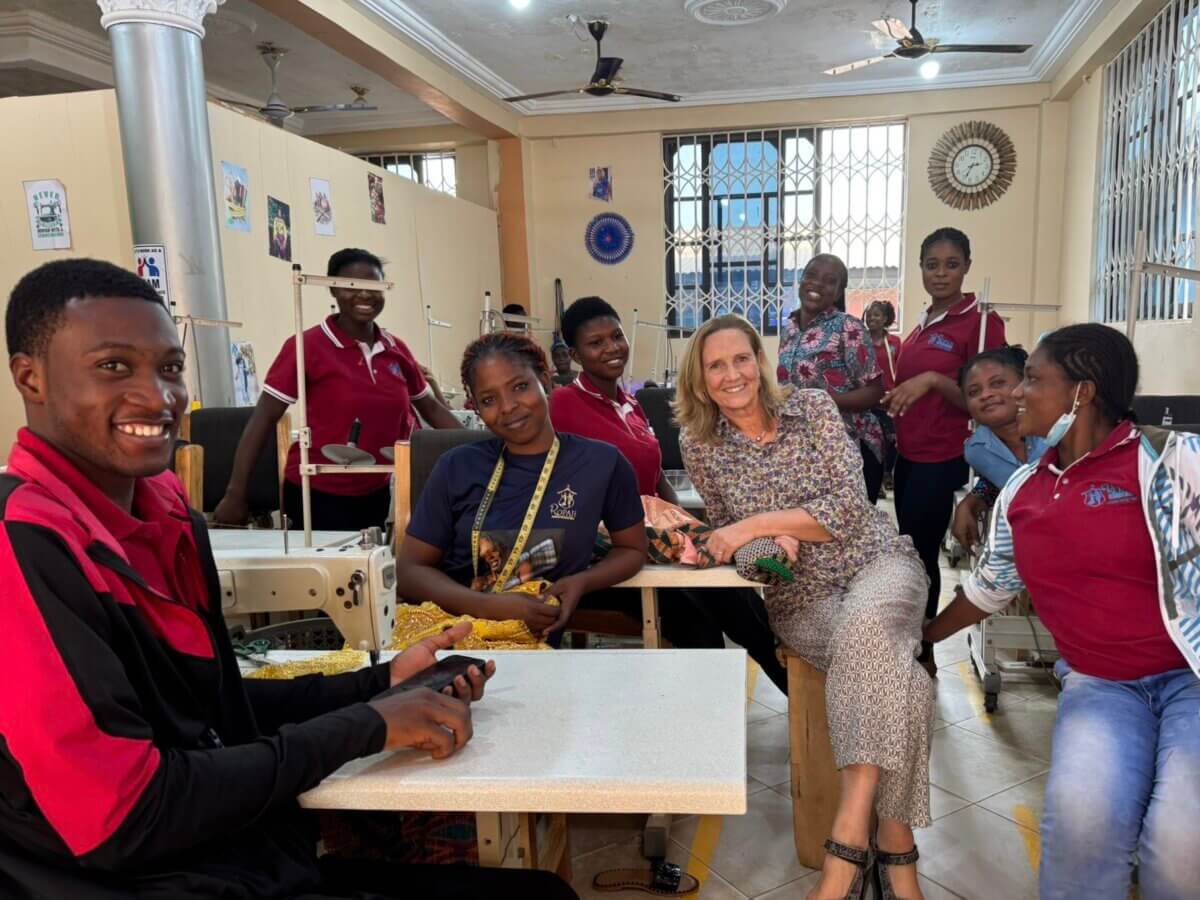
How do you prepare young people for a career in fashion when learning is driven by customer orders instead of a structured training programme? That challenge formed the starting point of a PUM advisory project in Ghana, where fashion training centre Ropah Fashion is working to professionalise vocational education. Through a combination of advice on location and remote advice, PUM expert Lise Bossink collaborated with Ropah Fasion. Together, they laid the foundation for a competency-based curriculum that will improve both the quality of education and the future employability of students.
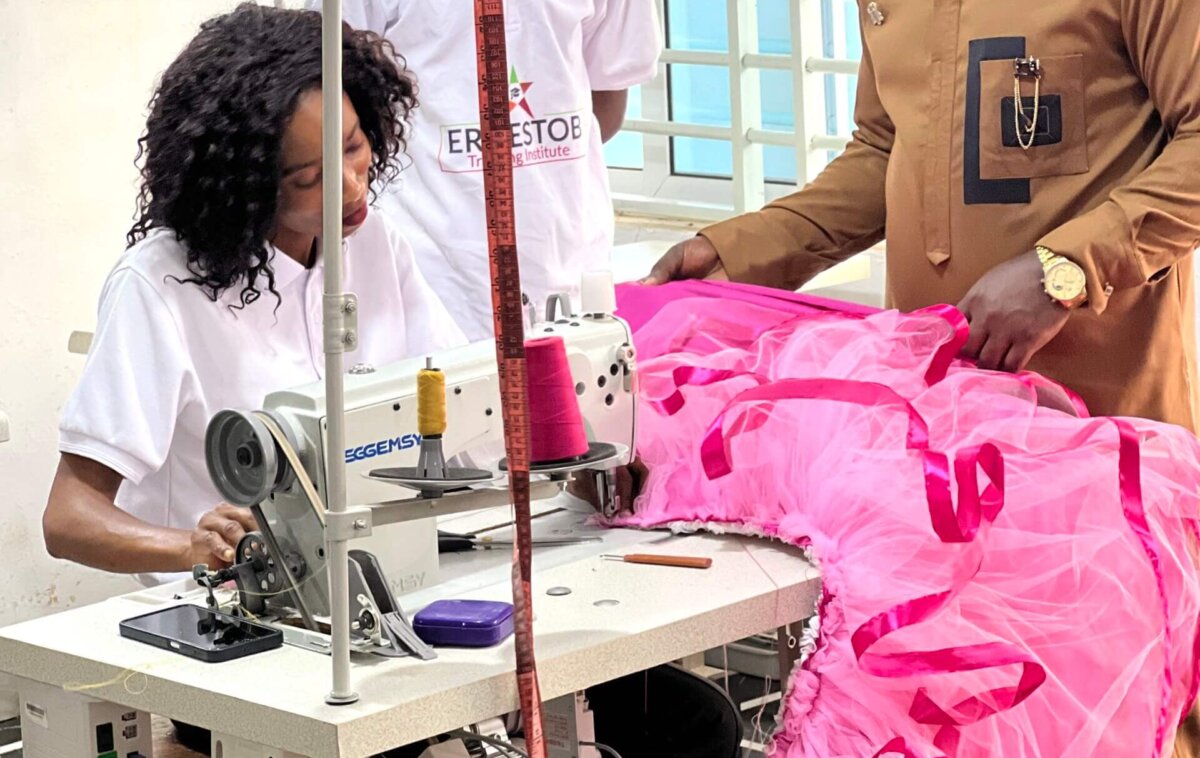
Located in Techiman, Ghana, Ropah Fashion is both a fashion production company and a vocational training centre. Around 35 students are trained in sewing and fashion design, while the organisation also produces school uniforms and custom-made garments for the local market.
The school had built a strong reputation, but its educational approach relied almost entirely on learning through daily production. Students developed practical skills by working on customer assignments, yet there was no structured curriculum defining what they should learn, when they should learn it, or how progress should be assessed. At the same time, most technical knowledge remained with the founder, making the organisation highly dependent on one person.
Turning practical experience into structural
learning
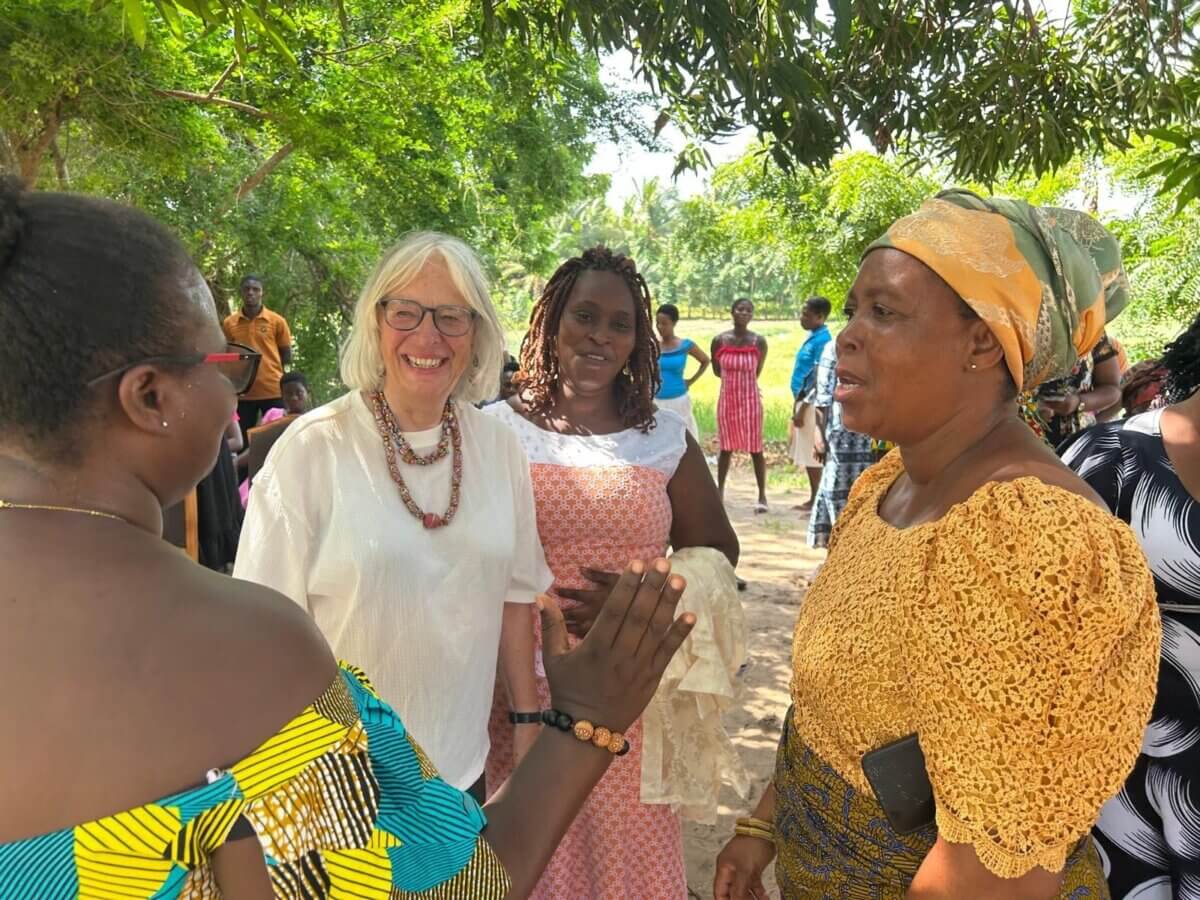
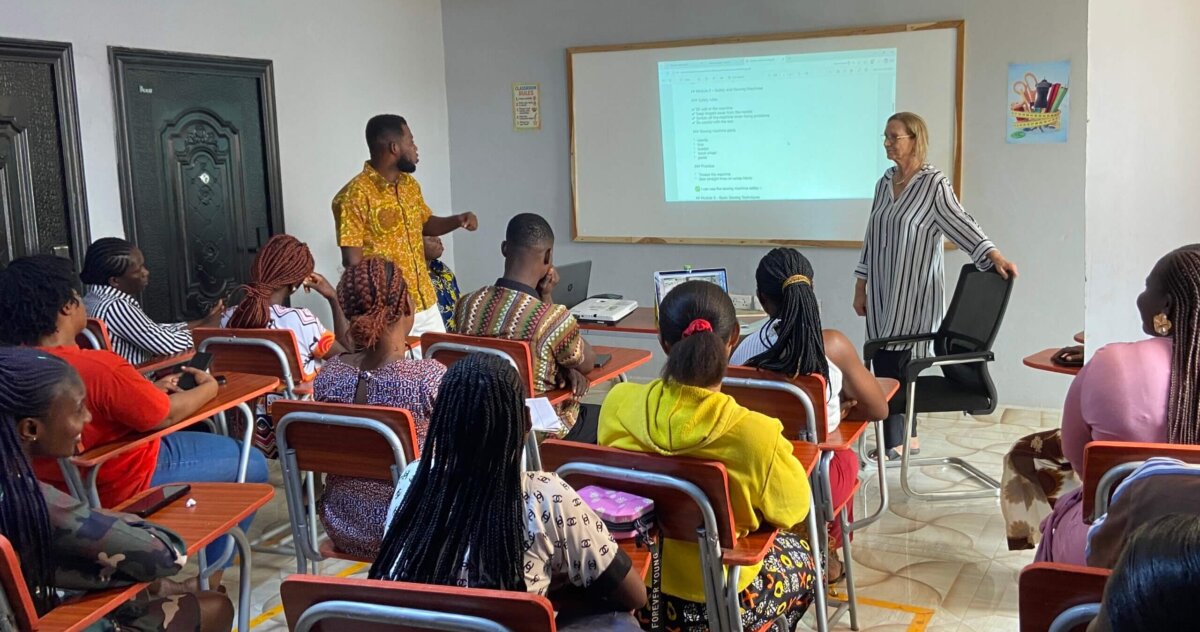
PUM expert Lise Bossink visited the training centre to assess its educational approach, train the trainers and introduce competency-based education. Drawing on her own expertise and through collaboration with the Regional Community College of Twente (ROC Twente) in the Netherlands, she translated proven educational methods into a practical approach that fits the Ghanaian context.
Rather than redesigning the entire education programme at once, Lise focused on creating a solid foundation. Together with the management team and trainers, she developed the first year of a competency-based curriculum. Lise adds: “This included learning objectives, lesson planning, task cards, work schedules and clear expectations for both students and teachers. Together, these elements provide a roadmap that the school can continue to build on in the coming years.”
Lise also provided practical training for the trainers in pattern making, efficient use and maintenance of industrial sewing machines, documentation and teaching methods. By strengthening the skills of the trainers themselves, the project ensures that knowledge remains within the organisation long after the project has ended.
A partnership beyond the classroom
One of the strengths of the project was the connection between Dutch vocational education and local entrepreneurship. The collaboration with ROC Twente brought valuable educational expertise into the project, demonstrating how partnerships can accelerate capacity building in vocational training.
The initial ambition had been to develop a complete three-year curriculum. During implementation it became clear that this would be too ambitious within the available timeframe. Instead, the project deliberately prioritised quality over speed by fully developing the first year and creating a clear roadmap for the remaining years. This realistic approach gives Ropah Fashion a much stronger basis for sustainable growth.
Looking ahead
Because curriculum development is an ongoing process rather than a one-time activity, Lise’s advice on location was followed by a remote advice project. Through regular online mentoring, Lise continues to guide the further development of the 3-year curriculum and supports the school in implementing competency-based education.
The longer-term ambition extends beyond education alone. During the implementation PUM will explore opportunities to support the school with more modern industrial sewing equipment through the Hans Blankert Fund.

Interested in this project? Get in touch with

Samuel Kwasi Ansu
Representative Ghana, Brong Ahafo
Similar projects