


- Projects
- A business game that empowers South African “township” entrepreneurs
A business game that empowers South African “township” entrepreneurs
Sigma International wanted to make entrepreneurship training more accessible and engaging. Together with PUM expert Bertrand Weegenaar and teams of Dutch and international students, they developed an innovative mobile game. It gives entrepreneurs a practical and accessible way to learn the fundamentals of building a successful business.
Sigma International is a South African organisation supporting small businesses through enterprise and supplier development programmes. They work with entrepreneurs in townships and rural communities, where access to traditional training can be challenging. The organisation had already discovered that quizzes, competitions and games motivated participants far more than classroom sessions. Their ambition was to develop a gamified learning tool that would make business training practical, interactive and easy to access. To realise this idea, Sigma approached PUM.
Rather than following a traditional advisory approach, PUM expert Bertrand Weegenaar proposed bringing together different areas of expertise. Through Windesheim University of Applied Sciences in the Netherlands, two multidisciplinary student teams from the 038Games programme spent almost a year developing the game under his supervision, while Sigma continuously provided feedback from South Africa.
An innovative
collaboration
The result is Business Success: The BMC, a mobile game that introduces entrepreneurs to the Business Model Canvas in an engaging way. Players build a virtual business while learning the essential building blocks of entrepreneurship through short lessons and interactive challenges. The game was specifically designed for the local context, including visuals and music, with multilingual support (p.e. English and Zulu), intuitive gameplay and accessibility for users with limited literacy. It also runs on older smartphones, making it suitable for entrepreneurs who may not have access to the latest technology. Bertrand explains: “The game needed to be enjoyable. But more importantly, it needed to inspire entrepreneurs to make better business decisions.”
Testing with entrepreneurs
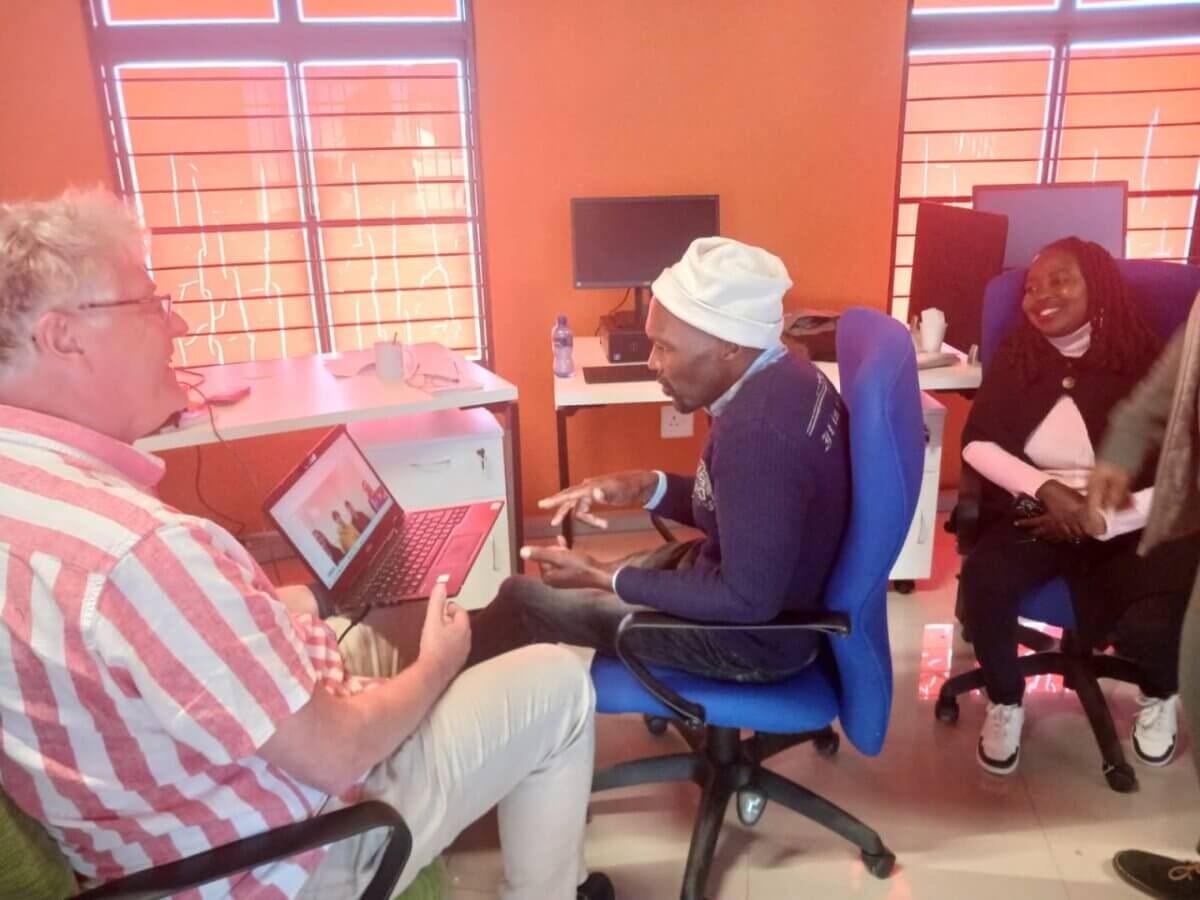
The prototype was tested with entrepreneurs in KwaZulu-Natal during Bertrand’s project visit on location. Participants responded enthusiastically, quickly connecting the game scenarios to their own businesses. Bertrand: “On the photo you see participants in Mpophomeni (South-Africa) share their game experience with students located in Zwolle (the Netherlands). Really a great moment.”
The pilot confirmed that game-based learning can make entrepreneurship training both more engaging and more effective. Throughout the project, online collaboration between Sigma, Bertrand and the student teams ensured continuous improvements based on practical feedback from South Africa.
The final product was handed over to Sigma together with all technical documentation, allowing the organisation to continue developing and using the game within its incubation programmes.
Creating opportunities beyond one project
The collaboration demonstrates how PUM can connect entrepreneurs with expertise in unexpected ways. By bringing together a South African incubator, Dutch higher education and experienced professionals, the project created an innovative learning tool while strengthening international cooperation.
Sigma is now exploring how the game can be expanded within its entrepreneurship initiatives, while a third student team in the Netherlands will continue developing new functionality.

More information
- Read the story on Bertrand’s Substack: Business Success, a serious game created by shared business and educational interests
- The student team’s work was recognised with the Winnovation Inclusion Award, praising the game for its accessibility across languages, literacy levels and different types of mobile devices. Watch the video from the students introducing the game: https://youtube.com/shorts/zGwDySaRyws?feature=share
Interested in this project? Get in touch with

Akash Singh
Representative South Africa, Durban
Similar projects