



- Projects
- Raising food safety standards for Indonesian crackers
Raising food safety standards for Indonesian crackers
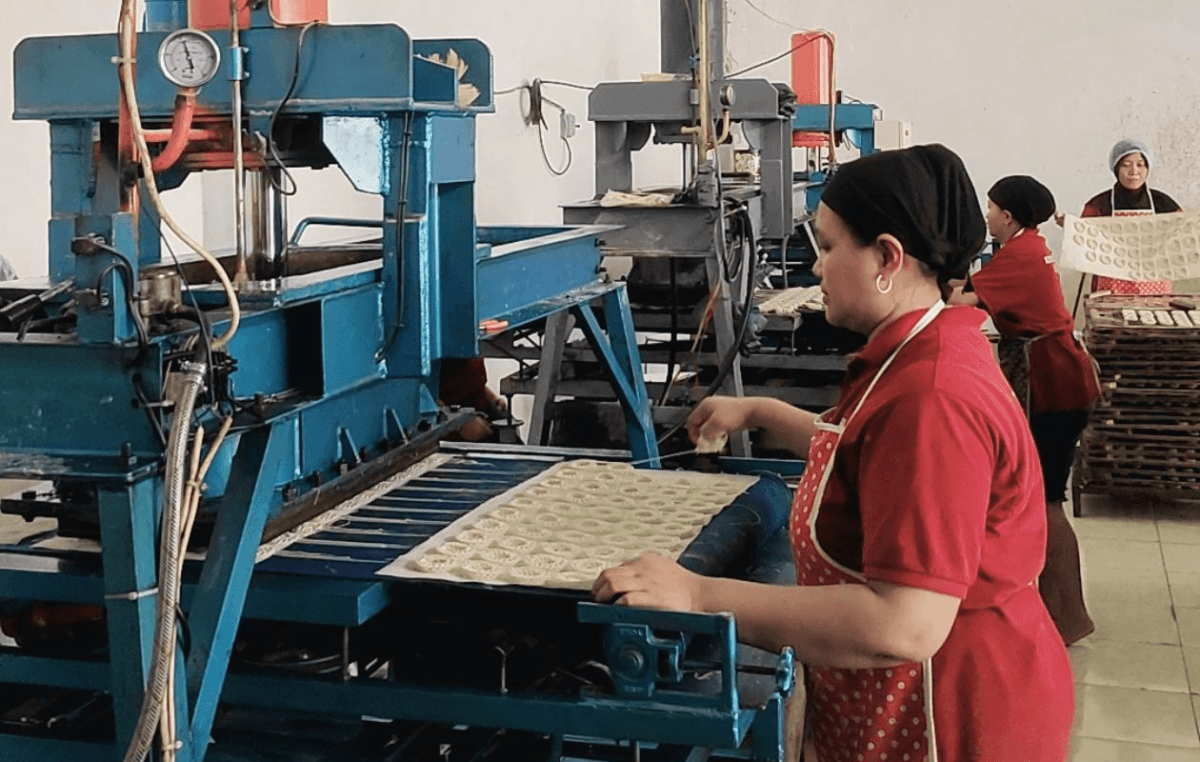
Indonesian food producer Nada Corp. has ambitious plans for growth. Together with PUM expert Anja Kleijn, the company professionalised its production and operations. A grant from PUM’s Hans Blankert Fund enabled Nada Corp. to invest in the recommended improvements, resulting in BPOM food safety certification.
Nada Corp., based in Kediri in East Java, was established in 2019 by the couple Mrs Novi Rahmatul Fauzi and Mr Aan Febriadi and they are still the management. These days, Nada Corp. employs around 20 people. The company produces dry kerupuk, traditional cassava crackers, as a semi-finished product for further frying. Production has grown rapidly in recent years and is now just over 1,000 kilograms per day.
Aan Febriadi is also chair of the Krupuk/Tapioca Cracker Association in East Java. He actively shares knowledge and experiences with other producers and opens his own company to them, something that is not common in the sector. In this way, lessons learned at Nada Corp. can also benefit other businesses and the wider business ecosystem.
Turning advice into daily
practice
Novi and Aan want to double production capacity and eventually reach international markets. To prepare for further growth, the company needed more structure in its operations and improvements in food safety, management and employee engagement.
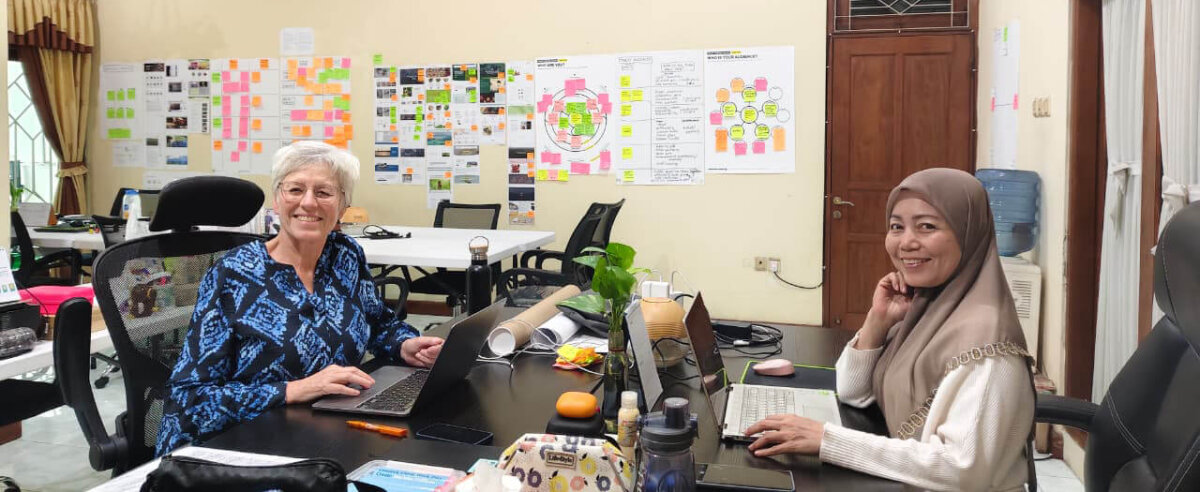
PUM Food Processing expert Anja Kleijn visited Nada Corp. to work with Novi and Aan and their team. Together, they identified practical improvements that could be implemented both in the facilities and in everyday working practices.
Some enhancements focused on behaviour and organisation: using checklists and cleaning procedures consistently, wearing protective clothing and ensuring employees understand their responsibilities. These new practices were discussed during weekly employee meetings. An important lesson was that physical improvements alone are not enough. Creating a lasting food safety culture requires employees to understand the reasons behind the procedures and apply them consistently.
Investing in safer production
Other improvements required investment, which was made possible by a grant from PUM’s Hans Blankert Fund. The fund provides co-funding for entrepreneurs’ initiatives to grow, innovate and enhance sustainability by investing in equipment, tools and facilities.
The grant enabled Nada Corp to renovate its production and sanitation facilities and invest in equipment. A new 60 kg automatic tilting machine reduced manual handling and significantly increased efficiency. Five batches that previously took almost five hours can now be completed in around 2.5 hours, cutting processing time by approximately 50%.
The investments have produced financial, social and environmental benefits. Nada Corp now has the capacity to produce up to 1,500 kilograms per day, depending on market demand. The upgraded factory provides a cleaner, safer and more comfortable workplace for its employees. Improved sanitation, easier-to-clean surfaces, better protection against contamination and more effective storage also contribute to cleaner production and reduced waste.
Most importantly, Nada Corp. has achieved certification by Indonesia’s Food and Drug Authority, BPOM. This confirms that its facilities meet Indonesia’s national food safety requirements. The certification increases the company’s credibility and opens opportunities in modern retail and, in the longer term, international markets.



Interested in this project? Get in touch with

T. Tarsini
Representative Indonesia, Surabaya
Similar projects